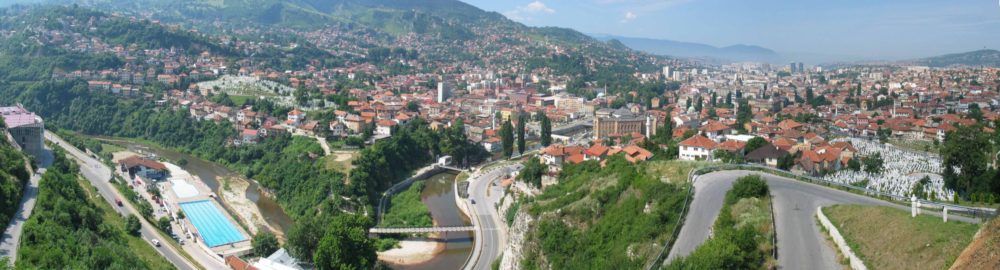
Europeans – albeit in American-form – have only been present in the Pacific Northwest for a little over 200 years. The main push of emigrants did not start until the mid-1840’s. Here our focus is on the mid-19th century Columbia River area views. A lot has changed since then. Some things remain timeless, however. The natural beauty of the landscape a prime example. Even here dramatic change does not go unnoticed.
EASIER WAY OVER THE CASCADES? HIGHLIGHTS ON THE BARLOW ROAD

Like the beginning, the Oregon Trail had various endpoints. For most, the overland passage ended at The Dalles. From here, emigrants with enough cash used barges to float their wagons down the river to the confluence of the Sandy River where they disembarked. Sandy Boulevard is the old route they took to finish the journey. In 1846, an alternative to the river journey arose – the Barlow Road.
The river route was expensive – $50 or more – and dangerous. By the time emigrants reached The Dalles, the season was fall. Water levels in the Columbia River were low meaning rocks in the Cascades Rapids making the passage more perilous. Rafts and barges could easily flip causing loss of life and household goods. Today, the rapids lie submerged in the waters of Lake Bonneville at Cascade Locks.
Continue readingGAZING UP IN AWE – RAFTING DOWN THE GRAND CANYON

The man who first led an expedition along the river responsible for one of nature’s most magnificent works offers a perfect description of the Grand Canyon –
The wonders of the Grand Canyon cannot be adequately represented in symbols of speech, nor by speech itself. The resources of the graphic art are taxed beyond their powers in attempting to portray its features. Language and illustration combined must fail.
jOHN WESLEY POWELL
I just finished reading Kevin Fedarko’s The Emerald Mile. It is a book about a trio of river runners who established a speed record for rowing the entire 277 miles of the Grand Canyon. They were helped by near catastrophic releases of water from Glen Canyon Dam. A release costing the Bureau of Reclamation over $32 million. The costs repaired spillway tunnels extensively damaged due to cavitation literally ripping apart the insides of the tunnels.
Continue readingWALLACE MCCAMANT – PRICE PAID TO BE KINGMAKER
TALES FROM RIVER VIEW CEMETERY
There are times when all it takes is for one person to stand up, raise their voice and make a stand to change the way it was. The way it was supposed to be. One of the persons was Wallace McCamant. His big moment was a hundred years ago at the Republican National Convention in Chicago, Illinois. It was a moment putting him into history’s limelight for a brief flash. A flash with consequences, rendered years ahead not as well recorded. Here is another story lying quietly in one of the secluded corners of River View Cemetery in the hills of southwest Portland.
Continue readingLA FAYETTE GROVER AND THE END OF OLD OREGON
TALES FROM RIVER VIEW CEMETERY
River View Cemetery is one of two historic cemeteries in Portland, Oregon. Lone Fir was the first cemetery, but filling up in the latter 19th Century, River View was established in the hills just – then – outside the growing city. Here, the families of well-to-do Portland buried their loved ones and still do. Walking through the memorials is a history lesson of the city. Street names come to life – through death. The larger monuments tend to overawe the more numerous plainer ones, as if trying to sum up life as the dead thought of their experience. Stories abound here among all of the graves, and it is one of the smaller, lesser monuments we move to today – the grave of La Fayette Grover, third governor of Oregon.
There is a small area in Portland where west-to-east streets are named after old Oregon governors. The sequence follows a series of Union military leaders from the Civil War – Grant, Sherman, Hooker, Meade, Porter (there is a Caruthers Street thrown in for good measure in between the governors, with a good story to boot.). In the governor section, there is Woods, Gibbs, Whitaker, Curry, Pennoyer, Gaines, Lane, Abernathy and Mood. Another governor with a short section of streets is Grover Street.
Continue readingTURN OF THE CENTURY COURTHOUSES OF CHARLES BURGGRAF
COUNTY COURTHOUSES OF OREGON
Of Oregon’s thirty-six counties, nine featured courthouses designed by Charles Burggraf at the turn of the 19th century. Burggraf was an Oregon-based architect and German immigrant. Three of those nine are still in use today, with two still operating as county courthouses while the other is a museum.
Continue readingTIGER TOWN BREWERY – RENEWAL FERMENTED IN THE WILD WEST

Tiger Town Brewing Co. is another one of the many examples of how craft breweries can revitalize a community. Mitchell, Oregon is and has always been a very small town. Centered not far from the geographic center of the State, Mitchell’s population since 1900 has always wavered around the 200-person mark, some years over (especially 1950 when the population soared to 415, though ten years later, it was back down to 236) and some years under. The 2010 census clocked Mitchell at only 130 people though that number rebounded a bit by 1920 with 160 people calling Mitchell “home”.
Continue readingBREAKING IN A NEW MOUNTAIN CORGI – THREE CORNER ROCK
One of my first posts covered the hike on Three Corner Rock with my last mountain corgi, Cuillin. Even at 12, Cuillin showed the style, stamina and simple good looks of the corgi in the heights of the Cascade Range of southern Washington State. He lived up to his Gaelic name. Three Corner Rock is high enough to be classified a Munro, even a metric Munro since the peak is 3,550 feet high (1082 meters). For those not familiar with the quaint system of mountain classification in Scotland, Munros are mountains over 3,000 feet (914 meters) and metric Munros are over 3,300 feet (1000 meters).
Of course, the mountains in the Pacific Northwest are higher and more numerous than Caledonia. We call Three Corner Rock, the perfect place for a fire lookout, at least until it moved north to the San Juan Islands.
Continue readingLATOURELL FALLS – waterfall magic and a primeval canyon
Latourell Falls is an easy hike. At only 2.4 miles with a gain of 625 feet, the hike is one for the masses. And the masses do hike. Come early. Come late and there will be no parking.
Here, the first of a series of waterfalls seen from the old Columbia Gorge Highway US 30 in an area known as “Waterfall Alley”. Technically, it is not the first, but it is the first seen from the old highway heading east from Portland.
The hike being short can easily be an add to other short hikes or even longer, more technical endeavors.
Continue readingNATURAL EMULSIONS MANIFEST IN THE PAINTED HILLS
The Painted Hills can be magical. Geological stratigraphy on display. Reds, tans, blacks, browns all laid out in layers slightly tilted. Of the three units of the John Day Fossil Beds National Monument, this one attracts the most visitors. The Hills are closest in distance to large cities of any size – one and half to two hours from Bend (90 miles) and four to five from Portland (a little over 200 miles depending upon your route) – while the other units are another hour further on.
Continue reading


