ST MIHIEL ABMC CEMETERY – HISTORY RELIVES A HUNDRED YEARS ON

St Mihiel Cemetery
Taken from the postwar Michelin Guide to the Battlefields is a early photo of the cemetery at St Mihiel.

World War One was not the first time American soldiers died and were left on foreign soil. The Great War did leave by far the largest number of dead Americans outside the native country, however. To establish and maintain cemeteries outside the United States to honor the sacrifices made by so many, the American Battlefield and Monuments Commission was set up in 1923 headed by no other than General John Pershing. There are 28 cemeteries falling under the guise of the ABMC today. Here is the ABMC St Mihiel Cemetery filled with soldiers many falling during the first offensive campaign fought by the US Army as a cohesive unit – St Mihiel.

Continue reading

BAD KREUZNACH – REMEMBER AND RETURN TO THE NAHETAL

Bad Kreuznach panorama Kauzenburg
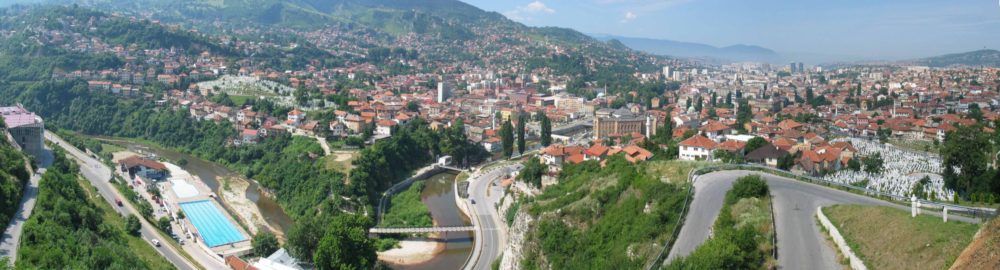
This is a 2018 panorama over the city of Bad Kreuznach from the Kauzenburg. The Nahe Canyon leading to Bad Münster am Stein-Ebernburg is on the right.

Bad Kreuznach – Bad “K” or just “BK” to most former Americans living here – was and is a wonderful town to be introduced into culture beyond America. Who says you can’t go back?  I lived and worked here for three years back in the 1980’s, a time of strong US dollars and a last fling of Cold War uncertainty. 

Today’s blog is a simple chance to amble down through the mists of my time and a chance to update photographic memories of a part of Germany flying under the radar of the Viking longboat cruisers.

continue here

HINDU SANCTUARY IN THE TUALATIN MOUNTAINS FOCUS ON DIFFERENT PATHS TO THE SAME GOAL

Sunlight filters through the trees along the Shrine Path high among the Tualatin Mountains.

“BUILD IT AND THEY WILL COME”

Build it and he will come”. So, intones the voice of Shoeless Jackson to the Iowa corn farmer played by Kevin Costner in the 1989 film Field of Dreams. The quote often remembered wrongly as “Build it and they will come”. The film was a version of W.P. Kinsella’s novel Shoeless Jackson. In this case, we will choose the more popular interpretation which better describes this Hindu sanctuary high in the Tualatin Mountains just north of Portland. A retreat pointing towards a universal message of different paths leading to the same goal.

Continue reading

WEST POINT CLASSES IN THE GREAT WAR

AEF Commander General John J. Pershing (class of 1886) and Army Chief of Staff General Peyton March (class of 1888)

West Point classes before the Great War was the main source of officers guiding the U.S. Army. The huge mobilization meant an equal increase in the officer corps which West Point could not begin to cover. But the officers with West Point in their background – much as was the case during the American Civil War – did account for most of the upper leadership positions within the Army and the AEF. Also, like the Civil War, there was a certain animosity between West Pointers and those without the pedigree in World War One, too. I, however, want to focus on the West Pointers here. This is a brief rundown of several who helped the American efforts during the Great War.

continue here

AMERICA REMEMBERED ON ISLAY, TORPEDOED VICTIMS OF THE GREAT WAR

America standing high on the cliffs of Islay.

The Setting

High above the cold, wind-driven waves of the Irish Sea, sitting atop rocky vertical cliffs on a southern peninsula with the odd name of the Mull of Oa on the Scottish island of Islay, a forgotten stone monument fashioned in the shape of a lighthouse. The American Red Cross erected the monument in 1920 to honor the memory of those who died in two separate troopship sinkings – the Tuscania and the Otranto – off the coast of Islay. Designed by a Glasgow architect as a monumental cairn recognizing the importance of those dead in the cold waters off Islay. Most who see the monument see a lighthouse peering into the dark and icy seas. America intertwined with Islay.

continue reading

FROM ITALIA IRRENDENTA TO ANTIFASCISM IN ONE BOOK – EMILIO LUSSU

Emilio Lussu as an officer with the 151st Italian Infantry Regiment of the Brigatta Sassari

ITALIAN OFFICER, POLITICIAN AND WRITER OF THE GREAT WAR AND BEYOND

A UNIQUE WORK

Perhaps the best novel written about the Italian Great War front – not in English is The Sardinian Brigade by Emilio Lussu. The book’s title in Italian Un anno sull’altipiano which translates to A Year on the High Plateau with other English editions are titled A Soldier on the Southern Front.

Continue reading

ASTORIA’S DOUGHBOY – UNIONTOWN’S MONUMENT TO LOCAL SOLDIERS OF THE GREAT WAR

The Astoria Soldiers Monument

DOUGHBOYS REMEMBERED

Drive on US 30 as the highway meets US 101 underneath the Oregon side of the Astoria-Megler bridge over the Columbia River and you pass a small statue of a World War I soldier. The monument is “the Doughboy” or Astoria’s Doughboy. Doughboy refers to the nickname given to American infantrymen during the Great War. The nickname continued to refer to American soldiers until the Second World War nickname “G.I.”.

World War 1 was a major event in the country’s history. The war pushed a somewhat unwilling nation onto the international stage. Not since the American Civil War had something like World War 1 transfixed the US. During that war, some 10% of the population of the Union served in the Federal Army. By 1918, with 4.8 million serving in the armed forces, 4.7% of the population had served.

Continue reading

PERSISTING IN THE FOOTSTEPS – EPHESUS AND ST. PAUL

Paul preaching in the streets of Ephesus
Paul preaching in the streets of Ephesus – by Eustache le Sueur.

Continuing on, for our last week following in the footsteps of St Paul, our group based in Kusadası, certainly one of the busiest tourist centers in all of Turkey. Package tourism is the order of the day. Leviathans of the cruise ship industry lumber into port daily. Thousands are dumped onto the local scene for a wander about the town or a quick shore excursion. Development has swamped Kusadası for better and/or worse. Our visits in search of St Paul here centered on trips to Ephesus and the ancient Greek cities of Priene, Miletus and the Temple of Apollo at Didyma. 

Continue reading

FOLLOWING IN THE FOOTSTEPS OF ST. PAUL – CHAPTER ONE

The theater at Saglassos with the city beyond high in the Taurus Mountains of Turkey

DISCOVERING PAUL

Following in the footsteps of St Paul brought us to Turkey. Christianity did not begin with Paul of Tarsus. But the movement got a huge jump start from his evangelizing journeys and the letters he wrote to various communities he had helped start. Paul figures in more of the New Testament than almost Jesus, himself. It was through Paul’s efforts the Way was expanded beyond the Jewish world, the original target for both John the Baptist and Jesus. Paul allowed non-Jews – Gentiles – to join the party without fully following Jewish law – the crucible being circumcision. By opening this door, the Way evolved into an entirely new religion. Actually, a new family of religions developed, far different from the original stream Jesus or even Paul had drifted along.

Continue reading

ERNEST PSICHARI – AN ENDING TO THE BEGINNING

Ernest Psichari before Rossignol.

A MONK SOLDIER

If the war had come just a little later, Ernest Psichari might have avoided his fate at Rossignol entirely by already not being a part of this world but cloistered as a monk in the next. Psichari was one of the up-and-coming French writers who fell early in the war.

Continue reading